

SPS BRANCH HISTORY

SPS BRANCH HISTORY
The Staff and Personnel Support (SPS) Branch came into existence at the same time as the AGC when on 6th April 1992 the Army formed its first new Corps in 14 years. Comprising of personnel from the Royal Army Pay Corps (RAPC), Women’s Royal Army Corps (WRAC) and the staff clerks from the Royal Army Ordnance
Corps (RAOC).
The first Director SPS was Brigadier C Geal OBE, who presented the new AGC berets to personnel on the formation day parade at Worthy Down, presided over by the inspecting officer Maj Gen R D Grist OBE.
The Directorate Staff and Personnel Support (Army) (DSPS(A)) officially formed in Worthy Down on formation date, descended from the Paymaster-in-Chief’s Directorate and the WRAC Directorate, both of which had been located in Empress State Building, London. The Branch Colonel, then titled Colonel SPS Branch, was
Colonel C N Brand, and acted as deputy to the Branch Director and responsible for the function of the Directorate as a whole.
The Directorate consisted of 2 halves; SPS1, responsible for the workforce, establishment and training functions, and SPS2, responsible for unit and fixed centre pay office technical and procedural matters which ensured that pay and administration functions were delivered to the Army.
SPS1
- Responsible for the workforce
- Establishment functions
- Training functions
SPS2
- Responsible for unit and fixed centre pay office technical and procedural matters.
- Ensured pay and administration functions were delivered to the army.

AGC TRAINING ORGANISATION
The various departments already in situ at Worthy Down underwent a significant transformation following the formation of the Corps. The newly titled AGC Training Centre (AGCTC) was responsible for facilitating the major reshuffling within the site, including the absorption of the Army School of Clerical Training into the School of Employment Training (SET).
SET was divided into five different departments which had their own specialisations; Officer Training, SPS Training, Specialist Training (Service Funds and PAMPAS), Career Development and Programming and Quality Assurance.
OFFICER TRAINING
SPS TRAINING
SPECIALIST TRAINING
CAREER DEVELOPMENT & PROGRAMMING
QUALITY ASSURANCE
The SPS Training Department was divided into 2 sections responsible for the training of Military Clerks and Finance Clerks.
The School of Finance and Management sat alongside the SET within the AGCTC. Its main role was to train Cost and Management Accountants, whilst also training Programmers, Systems Analysts and All Arms all-ranks on micro-computing skills.
THE EARLY YEARS 93 - 99
The final tranche of All Arms Clerks transferred on 1st July 1993, adding a further 2500 personnel resulting in a total strength of 6500 in SPS Branch.
The Regimental Administrative Office (RAO) Concept was introduced on 1st April 1993 following the change of ownership of soldiers’ documentation from Director of Manning (Army) to DSPS(A). This development completed the centralisation of all executive administration functions at unit level, and DSPS(A) was the lead in the introduction of new administrative procedures that reflected the Army’s needs in the 1990s and into the next century. Other new initiatives led by DSPS(A) in 1993 were the new Army ID Card project, the development of new ID Discs and a computerised Field Records Support System to enable Commanders in the field to have vital information on the workforce assets in theatre and the transmission of personnel information and occurrences from the battlefield.
THE REGIMENTAL ADMINISTRATIVE OFFICE
The first major field force unit within the United Kingdom to form a Regimental Administrative Office (RAO) was 19 Regiment Royal Artillery (The Highland Gunners), part of 24 Airmobile Brigade and stationed in Topcliffe. This enabled all financial and administrative needs, less medical, into one department at unit level. The RAO Concept created new posts, that of the Regimental Administrative Warrant Officer (RAWO) and the Staff Support Subaltern (later retitled to Detachment Commander in) re-roling the previous post of Assistant Adjutant which had predominantly been filled by WRAC subalterns. 19 Regt RA was also selected as one of 2 units to trial the Unit Computing (UNICOM) project. This system would provide for the administration of personnel, equipment, supply and Service Funds. UNICOM would provide Commanding Officers with management information in barracks (with an aspiration for it to be used in the field).
SPS TRAINING
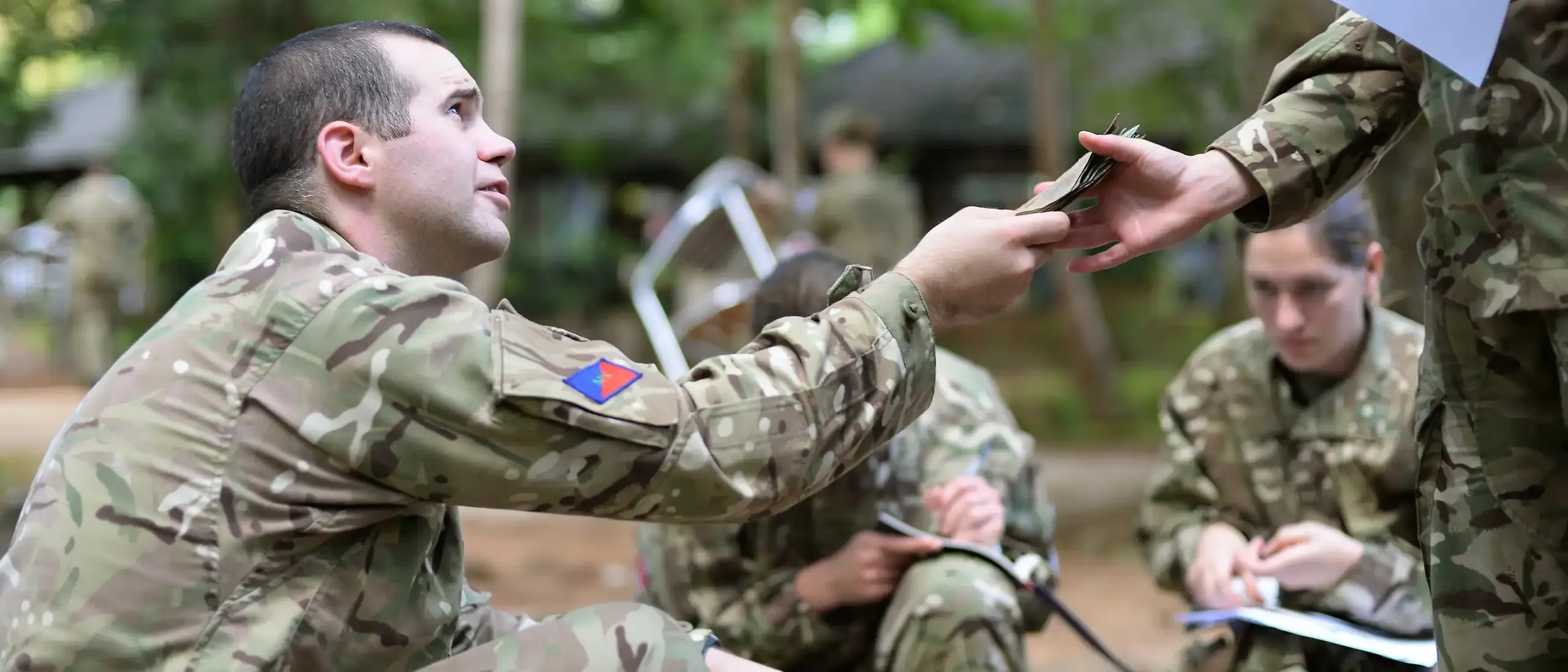
In April 1994, a combined finance and documentation inspection was introduced known as the SPS Inspection, which reduced the number of separate annual inspections of the various RAO functions. With the RAO Concept fully embedded into the Army, the SET at Worthy Down needed to deliver revised officer courses. The 6-week long AGC Detachment Commanders and the 18-week (reduced to 16 weeks a year later) RAO courses were in full-flow, as were the AGC Field Officers course, a 2-week course for senior captains selected for promotion to major across all branches of the AGC. Its purpose was to increase officers’ knowledge of the AGC, their general military knowledge with a view to enhancing their employability. It was during this year that the AGC Majors Career Course was trialled. This was a 9- week course for up to 10 majors selected from across the branches. To be considered for this course, officers must be considered to be ‘top flight’ albeit not selected for formal staff training. On completion of this course, officers would be posted to AGC SO2 appointments.
The SPS Junior and Senior Qualification promotion (JQC and SQC) courses were in full-flight since their introduction in 1993. These courses were designed to assess an individual’s ability to be successful Cpls or Sgts. The JQC was 3-weeks long, was leadership based and included a 48-hour exercise where students were to command, brief and lead a section in the field. The SQC, also of 3 weeks duration, was management based and involved role playing scenarios. Both courses culminated in a stretcher race and a formal parade on the drill square.
September 1994 marked the formal launch of UNICOM courses delivered by SET to meet the demands of training large numbers of System Managers (SM) and System Administrators (SA) in readiness for the implementation of UNICOM across the Army.
THE ARMY PERSONNEL CENTRE
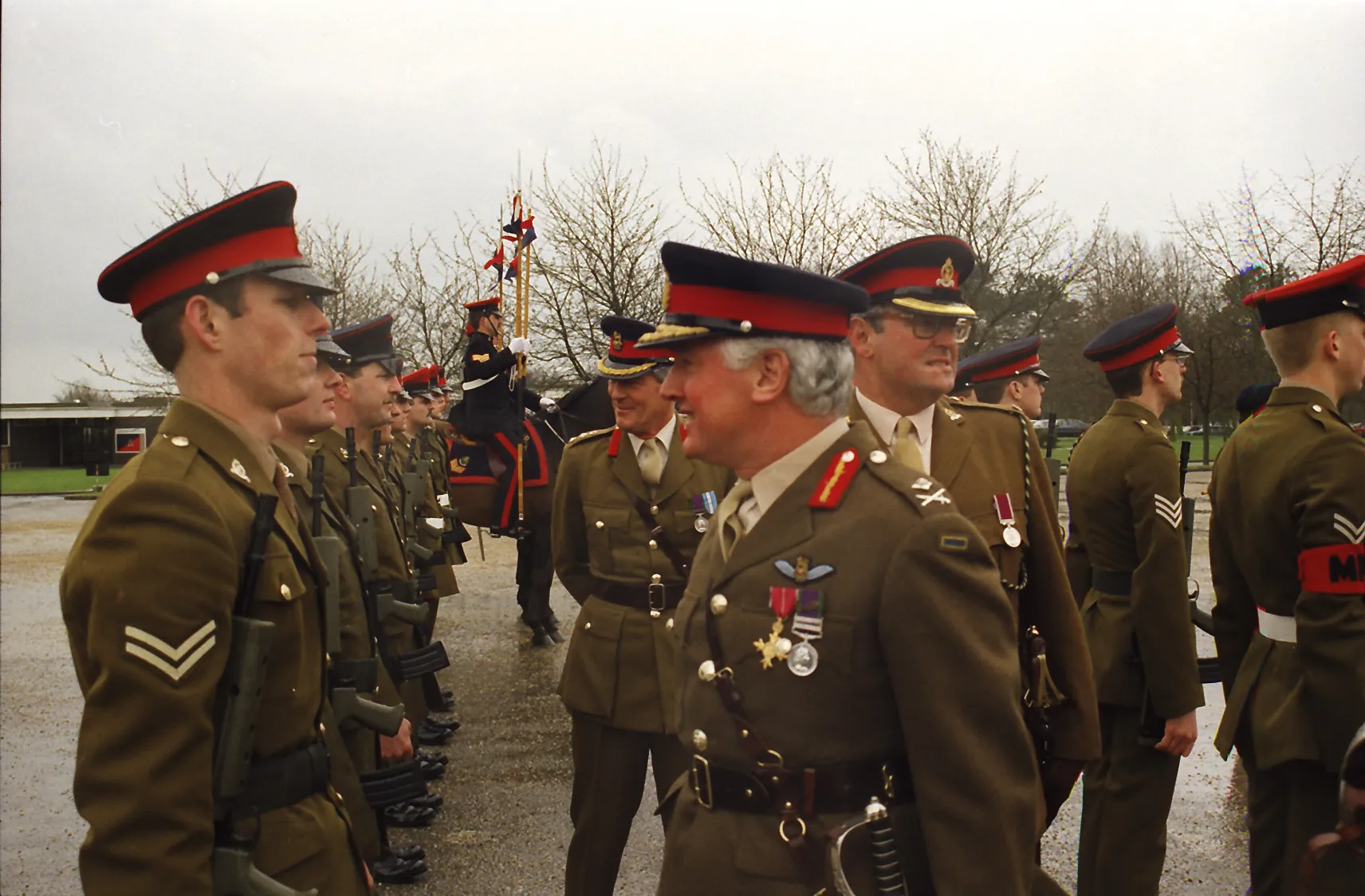
The arrival of a new Director SPS, Brigadier Neil Mackareth in December 1994 coincided with wider organisational structure across the Fixed Centre Pay Offices (FCPO), Army Pay Offices and Manning and Records Offices which were regional hubs responsible for centralised personnel pay and pensions administrational support to the Field Army, to be replaced by the Army Personnel centre (APC) in Glasgow. The APC formed up in August 1996 and expanded over the next year as more and more RPO/MROs closed across the country. The Medical Services and AGC MRO in Queens Park, Chester, closed in May 1997 and set up shop in the APC. The first Col AGC MCM Div was Col Val Batchelor OBE, late AGC(SPS).
FURTHER IMPROVEMENTS
The first draft of the Personnel Administration Manual (PAM) was introduced by DSPS(A) in October 1996. This intended to further streamline processes to improve SPS officers’ and soldiers’ outputs at unit level. An Integrated Military Clerk Class 3/2 course commenced on 1 April 1997, the first time that clerical training was combined with a finance module.
The first civilian accreditation outside National Vocational Qualification (NVQ), the Institute of Chartered Secretaries and Administrators (ICSA) and Chartered Institute of Management Accountants (CIMA) occurred in 1997 as the first SPS personnel qualified for fellowships of the International Association of Bookkeepers (IAB). The School of Finance and Management piloted courses that came with accreditation to the Association of Accounting Technicians (AAT) in May 1997, which had grown to 200 students a year by 1999.
Brigadier Richard Leighton assumed the appointment of Director SPS in May 1998 and led the development of an SPS HR Strategy which included increasing RAO workforce and an IT careers study, whilst the Directorate kept a watchful eye on the upcoming Pay 2000 initiative.
1998 also saw the commencement of the Military Clerk Integrated Class 1 Course which further combined clerical and finance training together with UNICOM training. Driver training was also conducted after the Class 3/2 course, giving our soldiers a Class B licence for the first time.
REORGANISATION
Depot AGC had the honour of implementing the first ever Triple Crown Competition which took place on Corps Day on 6 April 1999. Fourteen teams took part, all of them SPS or hybrid teams with other elements of the Corps embedded, and the overall winners was the SPS team from 1 (UK) Div, nicknamed ‘The Red Rhinos’. Depot AGC was re-titled Worthy Down Support Unit (WDSU) a month later in May 1999.
SUMMARY
In the years following the Corps’ formation, SPS Branch navigated significant change with professionalism and pride. It adapted to evolving uniforms, processes, technology, training standards, and the fully embedded RAO concept, all against the backdrop of an ever-changing Army. Throughout the 1990s, SPS personnel deployed on operations in Northern Ireland and the Balkans, reinforcing the Branch’s enduring reputation for excellence.
As the new millennium approached, global developments began to shape the environment in which the Branch operated. New Labour was in full swing, most of Europe had adopted a single currency, and a shift in foreign policy loomed with the rise of extreme terrorism. Against this backdrop, the dedicated men and women of the Staff and Personnel Support Branch stood ready to meet the challenges ahead.